Why Skool Is Changing How Creators Build Online Income
If you’ve spent any time in the online course world, you’ve probably noticed something shifting. Creators are starting to move away from simply selling courses… and leaning into something far more engaging and sustainable.

That shift is toward community-led platforms and one of the fastest-growing platforms leading this change is Skool. But Skool isn’t just another place to host your content. It represents a different way of thinking about how people learn, engage, and stay connected over time.
What is Skool?
Skool is an all-in-one platform that combines community, courses, events and gamification into one simple interface. Instead of separating your content from your audience, everything lives in the same space.
The platform was founded by Sam Ovens and Alex Hormozi, both of whom have built highly successful online education businesses. Their focus with Skool was clear. Simplify the experience and prioritise engagement over complexity.
What stands out straight away is how clean and distraction-free the platform is. There are no unnecessary features or complicated dashboards. It is designed to keep people focused on what actually matters, learning, interacting, and progressing.

Skool Pricing: Simple and Accessible
One of the most appealing aspects of Skool is how straightforward the pricing is. The Hobby Plan, priced at $9 per month, is ideal for anyone just getting started. It gives you the ability to build your first community, test your ideas, and begin creating content without a large upfront commitment.
As you grow, the Pro Plan at $99 per month unlocks the full experience. This includes unlimited members, full access to community features, and the ability to integrate courses and events into your ecosystem. It is designed for creators who are ready to scale and monetise their audience more effectively.
This simplicity removes a common barrier, you can get started quickly without overthinking the tech.
Check out the pricing options HERE

The Traditional Course Model (And Its Limitations)
For years, the standard model for online creators has been simple. Create a course, sell it, and then move on to the next one. While that model can work, it often comes with some challenges that are hard to ignore.
Courses tend to be static by nature. Once they are created, they rarely change. Students might go through the content once, but without ongoing interaction or accountability, many lose momentum. Completion rates can be low, and engagement often drops off not long after purchase.
This creates a cycle where creators are constantly chasing new sales, rather than building something that compounds over time.
Why a Skool Community Changes the Game
This is where Skool introduces a fundamentally different approach. Instead of focusing purely on content, it centres the experience around people. A community is not something that gets consumed once and forgotten. It is something that evolves, grows, and becomes more valuable over time.
When someone joins your Skool community, they are not just buying access to information. They are joining an environment where conversations are happening daily, where questions are answered in real time, and where progress is shared openly.
That ongoing interaction creates a level of accountability that most courses simply cannot replicate. People are far more likely to stay engaged when they feel part of something, rather than working through content on their own.

A More Sustainable Business Model
Another major advantage of building a community is the shift in how you generate income.
With traditional courses, revenue often comes in waves. You launch, make sales, and then start preparing for the next promotion. It can feel inconsistent and unpredictable.
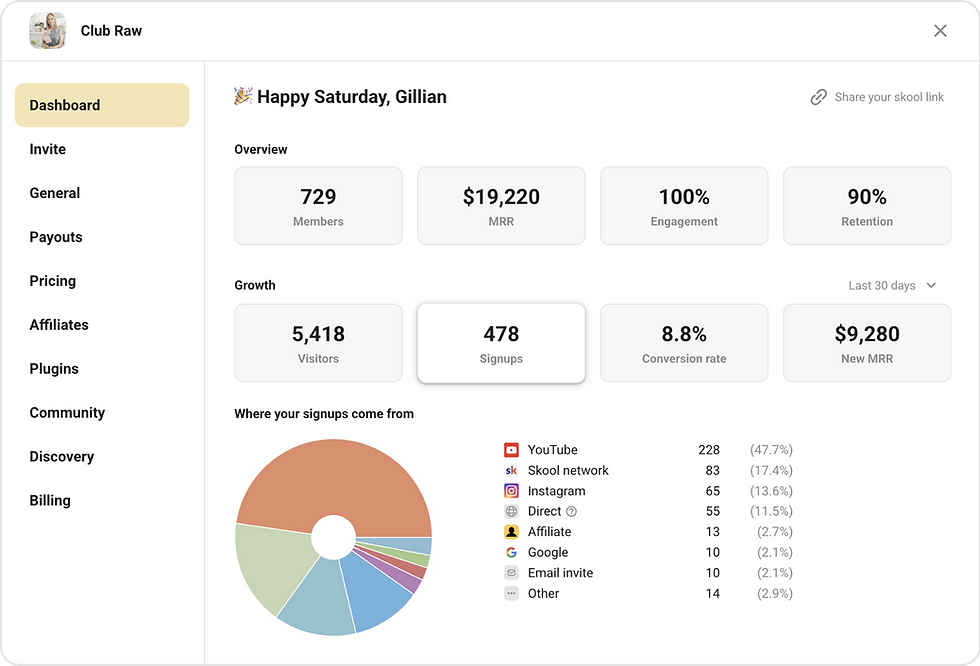
A Skool community, on the other hand, allows you to build recurring income through memberships. Instead of relying on one-off transactions, you are creating a model where members stay, engage, and continue receiving value over time.
This not only creates more stability for you, but also encourages you to keep improving the experience for your members, which further strengthens retention.
Content That Evolves, Not Expires
One of the biggest hidden advantages of a community is that your content never really goes out of date. In a course, what you record today may feel outdated in a year. But in a community, new discussions, insights, and shared experiences constantly refresh the value inside the platform.
Your members contribute to that growth. Their questions shape future content. Their wins inspire others. Over time, your community becomes a living resource, not just a collection of videos.
The Smart Approach Moving Forward
This is not about abandoning courses altogether. In fact, courses still play an important role.
The real opportunity lies in combining both.
Use structured course content to guide learning, but build a community around it to drive engagement, accountability, and long-term value within your Skool community. That is exactly what Skool is designed to support.
If you are building an online business today, this shift toward community is worth paying attention to. Courses can help you get started, but communities are what create depth, connection, and sustainability.
With Skool, you are not just delivering information. You are creating an environment where people can grow, stay engaged, and continue coming back.
Iin the long run, that is what separates a short-term product from a long-term business.
I hope this information has been helpful!
If you wish to join Skool and use my link, please feel free to do so. Thank you.

Romney Nelson - Founder of Global Self Publishing
